Covenant Relationships for Radicals: Baptists, Community Organizing, and Social Justice, by Richard Weaver
Full of insights, challenges and encouragements as Weaver makes connections, both theological and practical, between the historic Baptist understanding of covenant (so much richer than the notion of ‘membership’) and the principles of community organizing
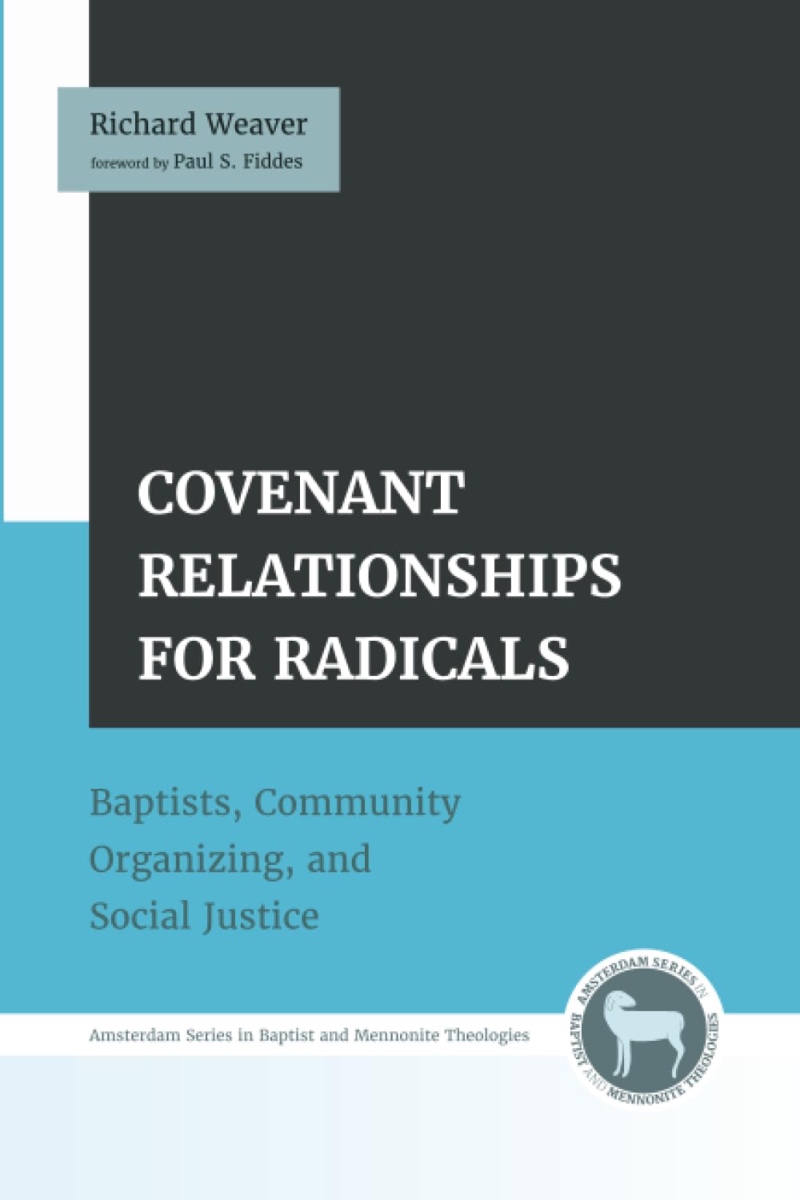 Covenant Relationships for Radicals: Baptists, Community Organizing, and Social Justice
By Richard Weaver
Amsterdam Series in Baptist and Mennonite Theologies
Pickwick Publications
ISBN 979-8-3852-5391-3
Reviewed by Stuart Murray Williams
Richard Weaver is currently the tutor for Community Engagement at Cardiff Baptist College, but he also brings to this book many years of experience in international development and in community organizing, together with doctoral research into its subject matter. Covenant Relationships for Radicals is in effect a popularised version of his PhD thesis. This means that is carefully researched and cogently argued, albeit (in common with most PhD-theses-become-books) quite demanding to read.
Weaver’s main concern is to make connections, both theological and practical, between the historic Baptist understanding of covenant (so much richer than the notion of ‘membership’) and the principles of community organizing. Those who are unfamiliar with community organizing will find helpful his introduction to the history of this practice and his identification and exploration of the six main components of this approach to engagement within local neighbourhoods.
Those who are familiar with this and have recognised ways in which local churches can employ community organizing to listen more deeply to their neighbours, discover gifts as well as challenges, and discern opportunities for partnerships, are invited to reflect theologically on this approach and to ask how this can both strengthen and be strengthened by Baptist understandings of covenant relationships.
Two very detailed chapters trace the development of Baptist thinking on social justice and its theological foundations from the 1980s to the 2000s. Examining the writings of significant Baptists theologians (especially Paul Fiddes, Richard Kidd, Nigel Wright and Brian Haymes) and the themes at the assemblies of the Baptist Unions of Great Britain and Wales during this period, Weaver identifies both encouraging trends and worrying omissions.
The final section of the book asks how the six core principles of community organizing might strengthen a Baptist theology and ethics of social justice and how the Baptist understanding of covenantal relationships might strengthen the practice of community organizing.
Quite a demanding read, then, but full of information, insights, challenges and encouragements – especially to Baptists who are invited to rediscover our own heritage of covenantal relationships and explore the largely untapped potential of community organizing within the missional activities of local churches.
Dr Stuart Murray Williams is founding director of the Centre for Anabaptist Studies at Bristol Baptist College. He is a founder of church planting network Urban Expression
04/09/2026