Unravelling DNA: Applying Christian Values to a Genetic Age, by Dr Chris Wild
'We are living through a genetic revolution. Yet few understand the science or appreciate the implications. Founded on Christian values, written in accessible style, this book empowers readers to make sense of these rapid scientific advances'
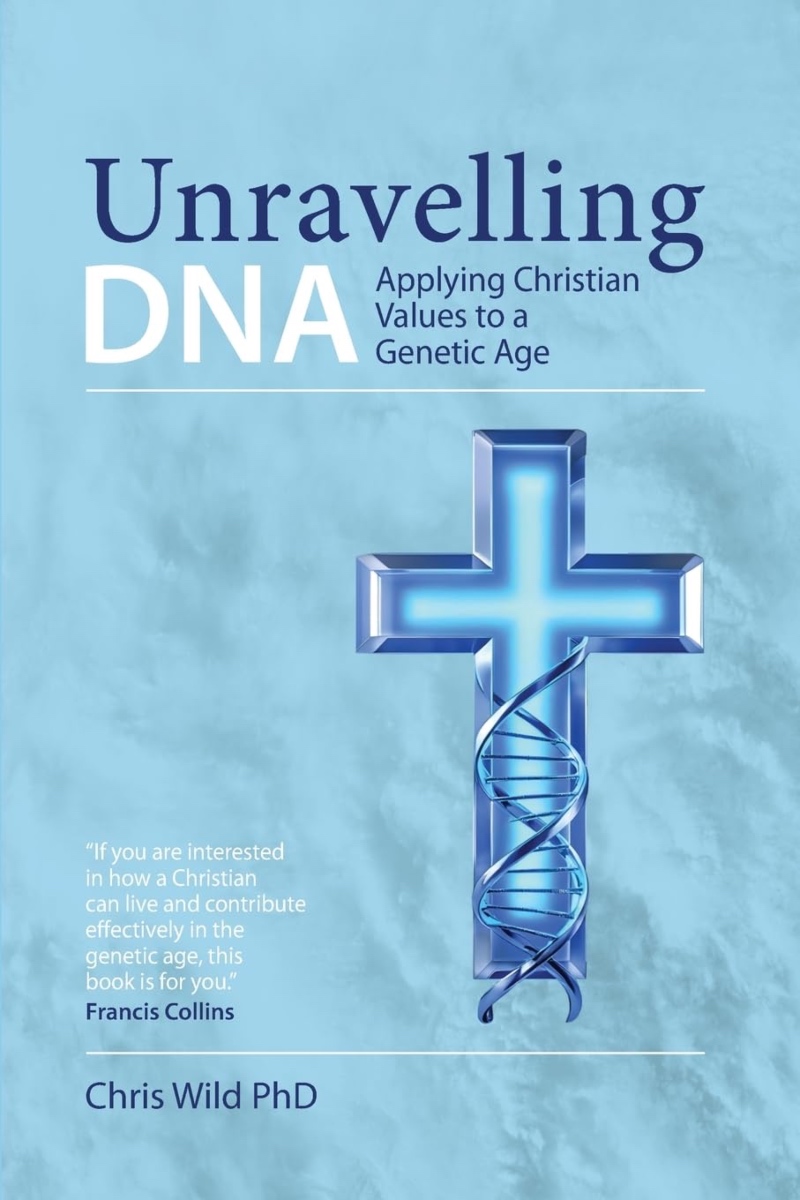 Unravelling DNA: Applying Christian Values to a Genetic Age
By Dr Chris Wild
GBJ Books
ISBN 9781068227509
Reviewed by Mark Geldard
I believe this is an important book. It addresses questions that are of crucial significance to us all. The author is also well qualified for his task. Chris Wild obtained a PhD studying DNA damage and repair, followed by a career looking at the genetic and environmental causes of cancer globally. He was formerly Professor of Molecular Epidemiology at the University of Leeds and is Emeritus Director of the WHO cancer agency.
In the first part of the book, Dr Wild offers a comprehensive survey of the issues raised by ongoing developments in DNA science and technology. He considers four distinctive forms of human interaction with DNA - reading DNA, copying DNA, editing DNA and storing DNA.
A wide range of examples from many areas of life are given under each of these four headings. These include the prevention and treatment of disease, reproduction (human, animal, plant), global food production, armaments, human value and identity, policing… This generous provision of examples helps to make the book accessible to the serious but non-specialist reader.
The survey is neither doomsday nor starry eyed. The writer is determined to draw out both the positive potential and the dangers of the developments he describes. He also warns us of how the potential of DNA technology can be hijacked by rich and powerful vested interests.
Dr Wild then considers what moral resources are available to us in making decisions in these critical policy areas. Refreshingly, he offers no simplistic answers. Rather he suggests ways in which we can work at hard questions through testing scientific and technological possibilities by reference to their potential impact on the range of core relationships that make up human life - relationships with ‘self’, family, human society, other animals and the environment.
The author frequently draws upon his personal faith and thus for him ‘relationship with God’ is at the centre of this network of relationships. However, it is clear throughout that the relationship test has major relevance beyond church communities.
I learnt a great deal from this book and believe it makes a significant contribution to discussing our global future.
Canon Mark Geldard, formerly lecturer in Philosophy and Ethics at Trinity College, Bristol
Baptist Times, 06/03/2026