Being radical in covenant relationships
Richard Weaver introduces Covenant Relationships for Radicals, a new book and an offering to our denomination which shows how a focus on covenant theology and ethics can be very helpful both to strengthen a Baptist understanding and practice of social justice, as well as something Baptists can offer others engaging in Community Organizing
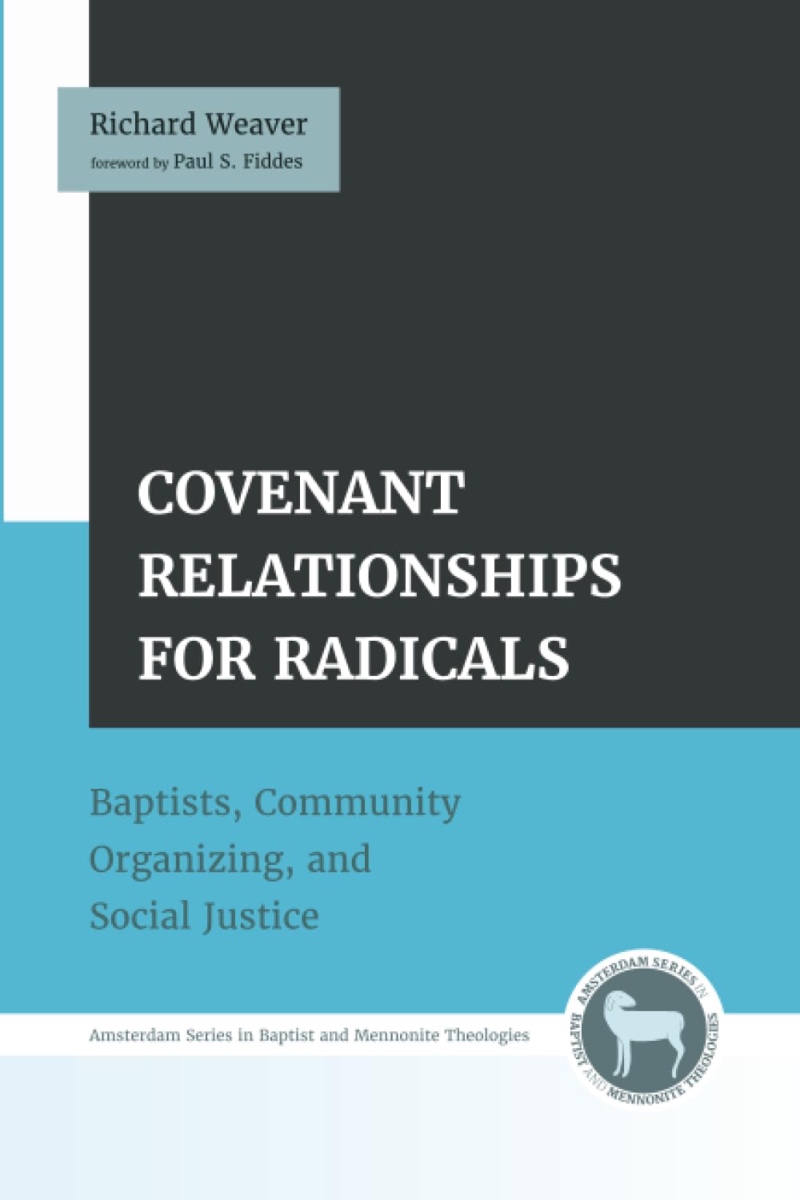 This new book is based on research and reflection on my practice as a Community Organizer, and my involvement in leadership roles in several Baptist churches in Wales and England.
I grew up in some unusual Baptist churches, in that they were teaching about and practising social action and social justice as a key part of mission. I then became frustrated that not all Baptist churches are like this.
In my organising with churches and other institutions, this was only rarely with Baptist churches. The relative lack of Baptist church involvement in organising in Wales and England increasingly bothered me over time.
I started to wonder why that is and whether Community Organizing could provide a way for Baptist churches to be more involved in tackling social justice issues and making positive change with others in local communities. I also wondered what Baptists could offer to community organizing. Hence the research and this book.
Community Organizing is an approach that originated in the US in the 1940s, and which came to the UK in the late 1980s. It has been adopted by churches from many denominations, by other faith traditions, and by many civil society institutions because of its perceived effectiveness as a vehicle for leadership development and collective action for social justice and the common good.
In the book I share stories of how Organizing has helped communities win significant change on issues such as housing, wages, and becoming more welcoming communities.
Community Organizing has informed other faith communities’ social justice work, particularly in Anglican and Roman Catholic churches in Wales and England.
Despite much theological reflection and research by Baptists and others on social justice as a key area for Christian discipleship and action by churches, there is currently little practice of social justice by UK Baptist churches and Community Organizing has not been well explored by them.
Baptists would benefit from a stronger theological ethic for social justice. In the book, I examine the theory and practice of Community Organizing, and establish a critical dialogue between this approach to social change and Baptist social justice theology, ethics, and practice with impoverished, vulnerable and marginalised people.
I explore current theological reflection on churches’ practice of Community Organizing, mainly by Catholic and Anglican theologians. I examine the extent to which a theological ethic for the practice of social justice within Baptist churches in Wales and England developed during the period when Community Organizing alliances were being established in various locations in these two nations.
I explore the main themes in the writing of four prominent UK Baptist theologians during this period, Paul Fiddes, Brian Haymes, Richard Kidd and Nigel Wright. I explore how their discussions and writings engage with key principles drawn from theological reflection on Organizing. Fiddes, Haymes and Kidd’s writing demonstrates the most extensive links, particularly in their writing on participating in God and covenantal relationships.
Covenantal relationships bring a Baptist theological understanding to Community Organizing and provide a dynamic way to weave institutions together in acting for justice. Thus, a focus on covenant theology and ethics can be very helpful both to strengthen a Baptist theological ethic as well as something Baptists can offer others engaging in Community Organizing.
In Wales and England, there has been over 400 years of conversation about what it means to be Baptist. However, in the UK we have less than 40 years of conversation about what Community Organizing means for churches. Up to now, Baptists in the UK have not really participated in this latter conversation as part of a Baptist conversation about justice. I propose that this is what the next step for Baptists should be.
Those who initially developed Community Organizing focused on what it means to be radical and what it means for an institution to act from its roots. It can be argued that Baptists can come to acting for justice based on covenant relationships from their roots. Through these relationships, Baptists can help recover solidarity between people and institutions by walking together and watching over each other in love, and so renew their understanding of what it means to be radical in covenantal relationships with others.
It is important that Baptists and others are practising covenant rather than just having them as a written document. The writings of Fiddes, Haymes and Kidd are very helpful in developing our thinking on covenant. However, I argue their understanding of covenantal relationships is not practised currently by Baptists in Wales and England.
My hope is that there might be many more stories that can be told in the future of Baptist engagement in Community Organizing in Wales and England, as Baptists seek to be radical in covenanting with God, and with others, in seeking justice.
Covenant Relationships for Radicals: Baptists, Community Organizing, and Social Justice by Richard Weaver is available in print, as an eBook and on kindle here.
Dr Richard Weaver is the Tutor for Community Engagement at Coleg y Bedyddwyr Caerdydd / Cardiff Baptist College. His PhD, from the Vrije Universiteit Amsterdam, focused on developing a stronger Baptist theological ethic for the practice of social justice.
04/09/2026