Worship and the Mystery of God, by John Shepherd
'Argues that beauty matters in worship, not merely as an embellishment of an otherwise essentially inward offering of the heart and mind, but as an embodiment of the divine presence and an expression of the transcendent... Baptists might be advised to find their own ways of recovering the holiness of beauty'
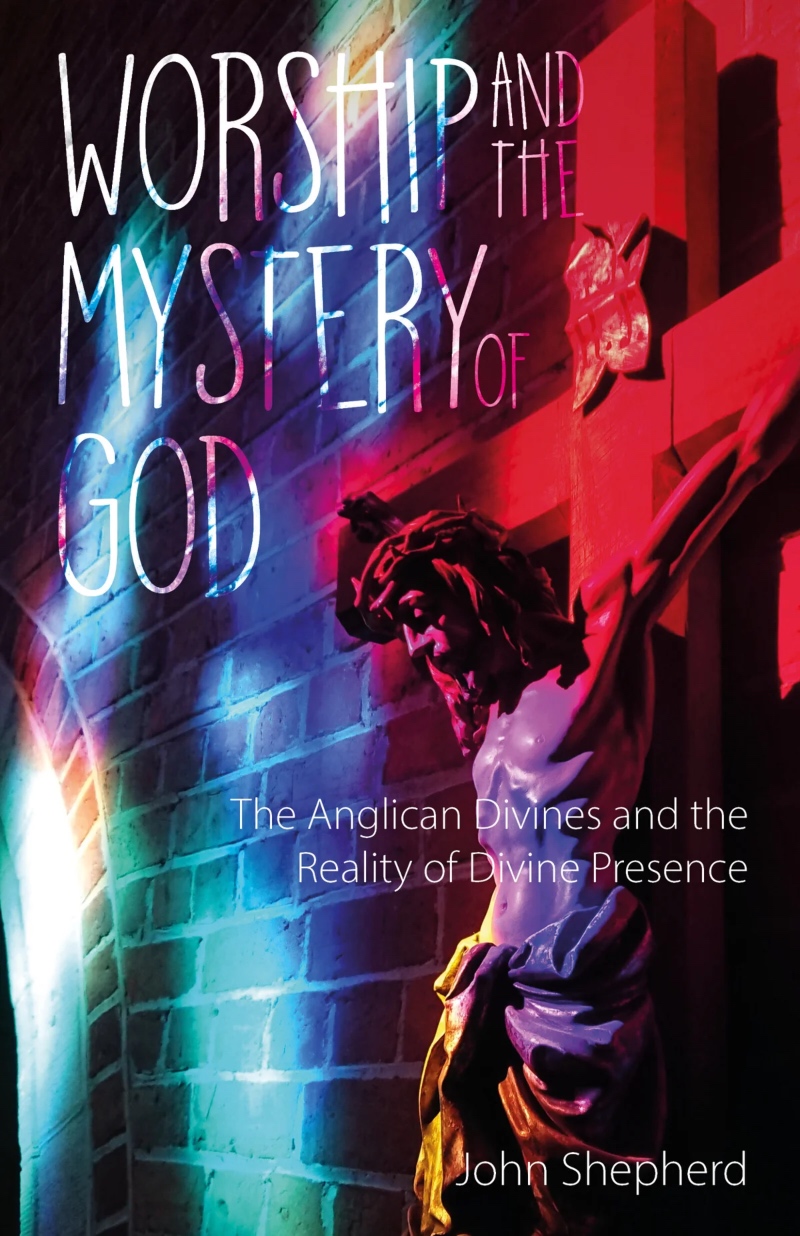 Worship and the Mystery of God - The Anglican Divines and the Reality of the Divine Presence
By John Shepherd
Sacristy Press
ISBN: 978-1789593884
Reviewed by Paul Goodliff
John Shepherd argues that a fundamental change in the understanding of the divine presence — how God is present in worship — occurred at the Reformation, and influenced Anglican theology and liturgy thereafter. The Late-Medieval church believed that God was present in the bread and wine of the eucharist: "the physical, embodied presence of Christ", and so "the reality of the divine presence in the offering of worship was manifest." (pp.1–2).
The Reformers comprehensively overturned this, locating the only acceptable offering to God in Christ's death on the cross, and transforming the eucharist into a remembrance of that event, with worship no longer utilising music, drama and architecture to point to this mystical presence, but focusing upon the heart and mind, and with it an inwardness tradition, as the location of devotion. Shepherd's book shows how such a stark reversal was gradually replaced by a renewed appropriation of beauty put to the service of an embodiment of divine presence in the Anglican tradition.
Certainly, the written record supports that narrative, as Shepherd carefully demonstrates. Cranmer and John Hooper, among others, preached the uniqueness and entire satisfaction of Christ's death, and incorporated this in published homilies and The Book of Common Prayer. The focus of worship became edification (the word preached) rather than mystical devotion to the divine presence in bread and wine. And here Baptists followed (and largely sustained) such an emphasis to the present day. But I wonder if in the vernacular experience of worship, the mystical had been quite so comprehensively replaced, even as within the breadth of Baptist traditions there remained a mystical and sacramental strand.
He shows how old musical traditions of polyphony sung by a trained choir were replaced by the singing of metrical psalms by everyone. The degree to which this was embraced is represented by Cartwright (1535–1603) and his detractor, Whitgift (1530–1604) (chapter6), while in chapter 7, Richard Hooker's appraisal of music is discussed, with its approval of music that embodied beauty. The reappraisal had begun.
There follow chapters on Lancelot Andrewes and John Buckeridge, arguing that music enabled the uniting of the earthly and the heavenly; on John Donne, whose eucharistic theology is far-removed from that of the first Reformers; and the generation of Carolingian Anglican divines who saw music as indispensable to worship (Laud, Thorndike and Cosin in the 1630s) and even a participation in the worship of heaven (for instance, Thomas Westfield, chapter 12) and a means of holiness (with beauty in both places and music, Jeremy Taylor, 1613–1667.)
All of this is an admonition to continue to embrace transcendence in music and architecture as an expression of worship today. Easier to experience in an Anglican Cathedral, perhaps, than the local Baptist church with its amateur band and gentle rock or country music idioms in songs, the argument of this book is that beauty matters in worship, not merely as an embellishment of an otherwise essentially inward offering of the heart and mind, but as an embodiment of the divine presence and an expression of the transcendent.
Such a re-enchanting of worship is perhaps one of the factors behind the current 'quiet revival', and Baptists might be advised to find their own ways of recovering the holiness of beauty and the beauty of holiness in both music and the adornment of their buildings, and the language by which worship is expressed in prayer and praise.
The Revd Dr Paul Goodliff is Lead Tutor in The Professional Diploma in Pastoral Supervision, IPCS
Baptist Times, 30/01/2026