Archbishop Sarah Mullally, by Andrew Atherstone
Atherstone goes beyond these headlines to give us a greater sense of Mullally’s life - a helpful account of the new Archbishop
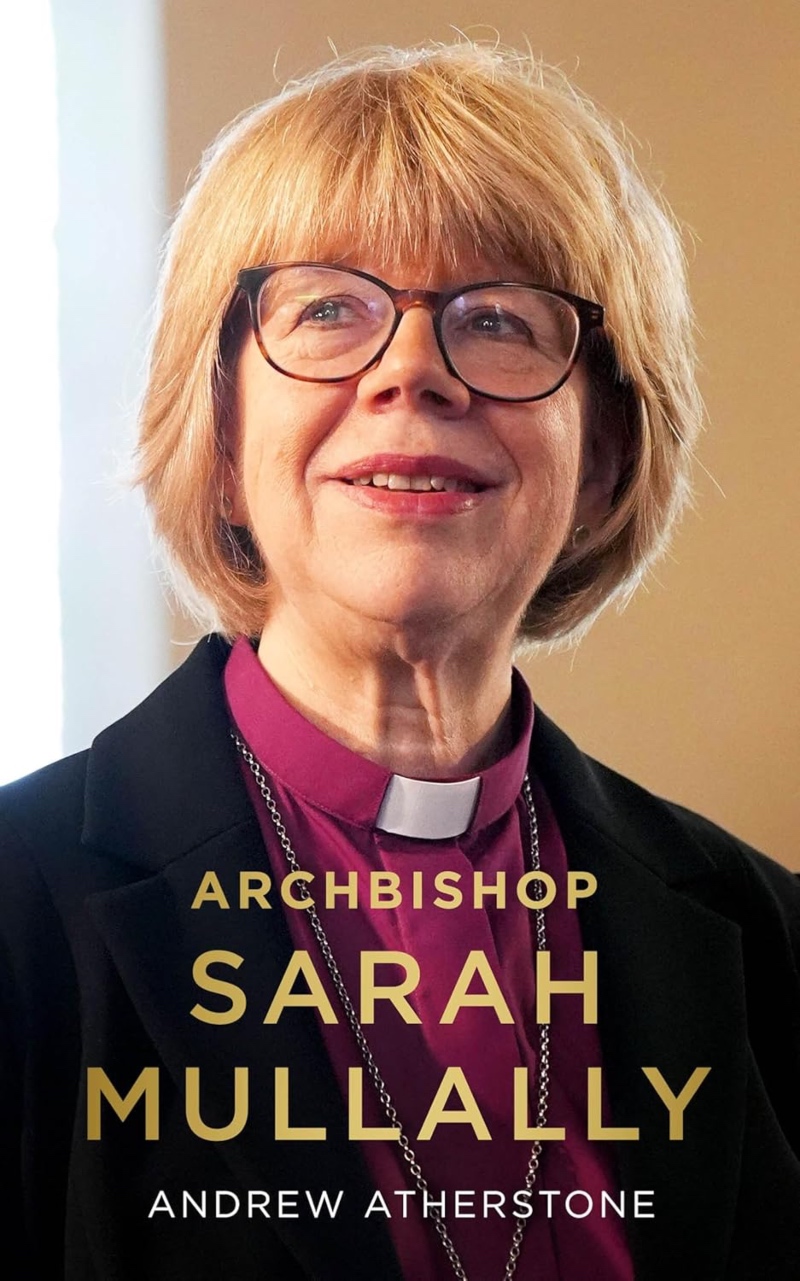
Archbishop Sarah Mullally
By Andrew Atherstone
Hodder & Stoughton
ISBN: 978-1399828789
Reviewed by Andy Goodliff
We have a new Archbishop of Canterbury: Sarah Mullally. This is probably not news to you. Who is Archbishop Sarah? Andrew Atherstone (Professor of Modern Church History at Oxford) has in double quick time provided us with a biography. (He did a similar job on the appointment of Justin Welby in 2013, and will more than likely write another one for whoever follows Archbishop Sarah — she will only be in post a maximum of seven years.)
Atherstone has researched the Nursing Times, the Church Times, and Mullally’s blog! We might be aware of the headlines — Mullally was a nurse (who became Chief Nursing Officer) before becoming a minister and most recently Bishop of London, the first woman to hold that role. As Atherstone begins ‘there has never been an Archbishop of Canterbury like her.'
She is the first woman. She is the first Archbishop with a long previous career (Welby worked 11 years in the oil industry; Mullally worked as a nurse for 20 years). She is the first Archbishop to come into ministry via a part-time theological course.
Atherstone goes beyond these headlines to give us a greater sense of Mullally’s life from growing up in Woking, to her nursing career in London and her ministry in Sutton, Salisbury, and Devon, before her appointment in London.
What do we learn? Mullally’s career both as a nurse and as a minister has been one of moving through the ‘ranks’, with no long stint in any one role for long — the longest being as Bishop of London (2018-2026). Her Christian experience for much of her life was within the evangelical wing of the Church of England, broadening out as she moved into ministry.
Church has always been a big part of her life, and she took on a number of roles in parish life, alongside her nursing career. She is a practitioner and not a theologian. Atherstone comments that Mullally is ‘sometimes impatient with theology, concerned that it is a barren intellectual exercise.’ She approaches ministry in a similar way she approached nursing — with a commitment to care and professionalism and best practice. This does not mean she is not reflective, as the blog she kept for nearly a decade displayed.
Atherstone tackles three big features of her Bishop of London ministry — being a woman, safeguarding, and her involvement in the Living in Love and Faith (LLF) process. On the first, Mullally worked hard to earn the respect of the whole diocese, even those who would not recognised her ordination, and on the whole the evangelical and Anglo-catholics have appreciated her approach.
She has come under heavy criticism for safeguarding and LLF. On the former, this is unfortunately a Bishop’s lot. Atherstone presents that where there have been safeguarding failures, they are not all the responsibility of Mullally. On LLF, Atherstone takes us through the high-profile role Mullally has played and shows its cost, but also Mullally's integrity to do to the best of her ability.
In 160 pages — in what was what perhaps not a straightforward task, because of the limited material — Atherstone has marshalled together a helpful account of the new Archbishop. He gives us as much of a picture as he is able of Mullally life’s and a sense of who she is. He does this with a fairness, that avoids hagiography or being overly critical.
Archbishop Sarah’s ministry will be an important one because of the context and challenges she inherits, but it will also be a relatively short one, no more than seven years (when she will have to retire having turned 70). It has the potential to be a fascinating one — her previous experience will perhaps mean her period in office will bear some similarities to her predecessor (‘managerial’), but it will be different because she is different and there will be a desire to move on from the Welby model.
Will she be able to leave her successor a church in a more positive position? Atherstone may well be in a position to write that account in a few years’ time.
Andy Goodliff is the minister of Belle Vue Baptist Church, Southend. He is a lecturer in Baptist History at Regent's Park College, Oxford
19/06/2026