Coming to Faith Through Dawkins, by Denis Alexander and Alister McGrath
These 12 essays shed light on why some people who have tried new atheism have found it wanting
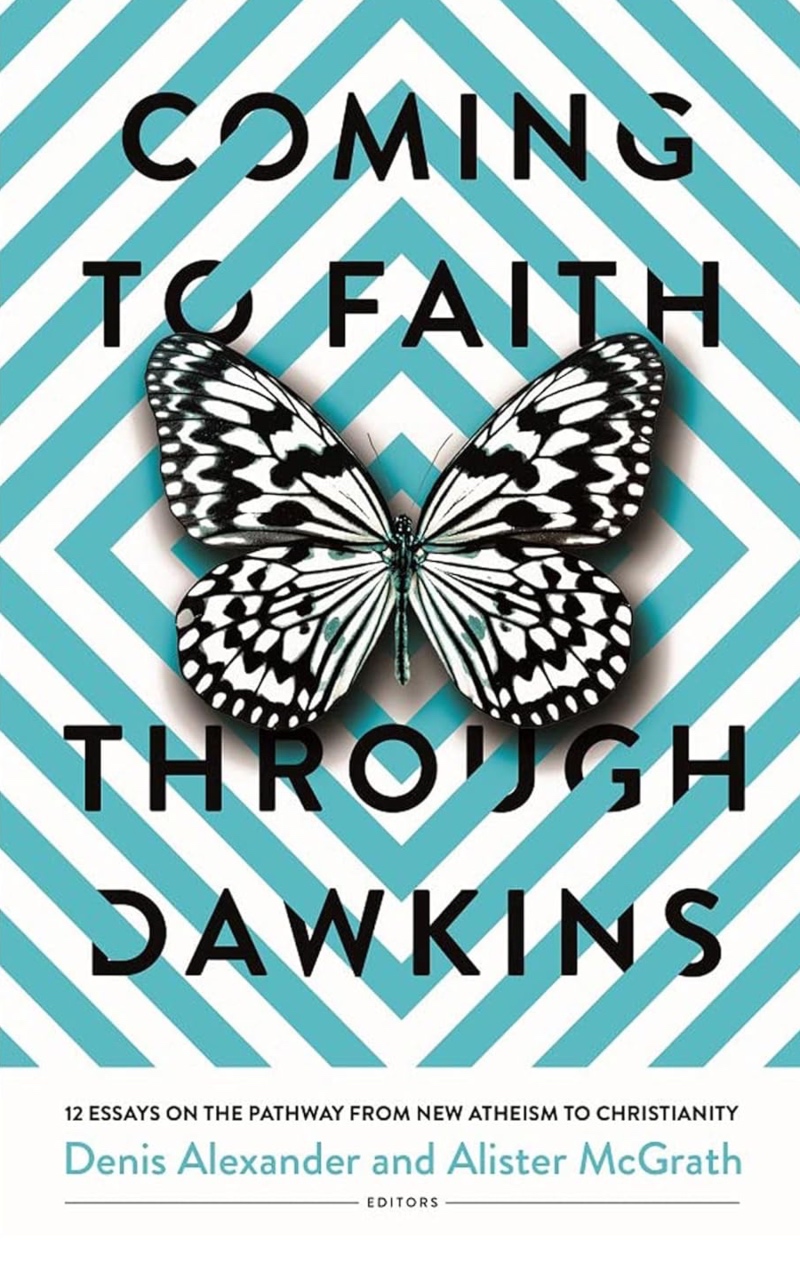 Coming to Faith Through Dawkins: 12 Essays on the Pathway from New Atheism to Christianity
By Denis Alexander and Alister McGrath
Kregel Publications, US
ISBN: 978-0825448225
Reviewed by Terry Young
Twenty years ago, it looked like thinking Christians were heading for extinction under the intellectual firepower of the Four Horsemen of the New Atheism: Richard Dawkins, Daniel Dennett, Sam Harris, and Christopher Hitchens. Today, I keep hearing of bright thirtysomethings losing their faith quickly after encountering a critical angle of which they had not been aware. This monograph from 2023 sheds some surprising light on the puzzle.
With all that in mind I bought a copy and downloaded it the day I heard about it, to see what Denis and Alister had been up to. Turns out, they’ve been talking to people who have tried atheism – Dawkins’ advocacy being a common thread – and found it wanting. Twelve of them have written up their findings as travelogues, which makes each an easy read. They don’t all start in the same place: they come from Africa, Europe (including the UK!) the Middle East and the US.
They also come from a range of backgrounds. Some were escaping a Christian upbringing, but Anikó, for instance grew up under a Marxist ideology in Budapest. For her, this rather diluted the potency of the atheistic claim that religion is the cause of most wars, since she’d always known that wars were a struggle for resources, other explanations being a gloss.
Nor do they all end up as protestants, or even at the evangelical end of the spectrum.
This is what a qualitative researcher might call a purposive sample, where the reader gets a rich description of each journey, but no statistical trends. That said, the findings gel with reports younger people are turning to faith, and help explain why the tides on faith are on the turn.
While these writers are exceptionally bright and articulate, they had different reasons for studying the Four Horsemen, and their reasons for rejecting them also differ. Sarah was fascinated by Robert Hook (a 17th century polymath) and his unified view of faith and science, while Andrew is an able academic who opens up his world of ethno-ornithology to explain what didn’t make sense to him.
The bad news is that you may not buy into the reasoning of every author on this roster while the good news is that wherever you’re coming from I think you’ll find a few whom you relate to. Maybe you’ll buy Nick’s tekkie approach or identify with Ashley’s analysis of her experiments in psychedelics.
From what I can see, abject agnosticism is sufficiently reasonable to encourage atheism so long as science holds the keys to everything; and as long as the rules for what is scientifically sound apply to the rest of your life. Most report themselves content with the science but discover it has been insufficiently integrated with the other knowledge systems needed to navigate life. A common experience seems to be that they were content to hitch a ride with the Four Horsemen until the chariot ran out of explanatory steam (if that’s not too mixed a metaphor). And so, Peter talks about needing to connect the right and left halves of his brain.
Many of the writers were also turned off as they detected a sneering tone in their reading or watching. I would fail as a reviewer if I didn’t acknowledge how impressed many of them came to be by the polite confidence of William Lane Craig, and by the evidence he assembles in favour of Christian faith being reasonable.
I’ve still not mentioned Louise, Rafik, Judith or Waldo, so you’ll have to read them for yourself. Johan is my favourite with his wry observations that will resonate with anyone who grew up in conservative Christian circles and his amusing description of the trainwreck of his atheism. Everything was going well until he met a family friend who was studying theology. His Specsavers moment (other brands are available) came as he discovered he should’ve found some better atheists. She then took his arguments apart and showed him how to reassemble them if he really wanted to try living by them.
Denis and Alister have assembled 12 witnesses who can speak to thoughtful laypeople. Depressingly, this collection raises questions about why so many churches have no answers for young people bouncing off their first tackle with secular atheism. Most of our voyagers came across Dawkins and his colleagues because they were looking for better explanations. That surely is a searching indictment.
But there’s an upside, too. For me it was a helpful update on today’s atheism scene. If you find you haven’t time to watch endless online debates or read thousands of pages of dialectic, books like this can bring you up to speed and update the list of names you will want to follow up.
For that alone, this book is worth buying.
Terry Young is a missionary kid who read science and engineering. After a PhD in lasers, he worked in R&D before becoming a professor, when he taught project management, information systems and e-business, while leading research in healthcare.
He set up Datchet Consulting to have fun with both faith and work and worshipped at Baptist churches in Slough for 19 years before moving to the New Forest.
The review originally appeared on Terry's Substack, and is republished with permission
15/05/2026