‘Why I am no longer talking to white people about race’
The era of ‘performative allyship’ must come to an end, writes Justice Enabler Wale Hudson-Roberts. In this precarious and vulnerable landscape for Black and Brown people, we need to think honestly about forcefully and proactively challenging racism to enable genuine long-term change
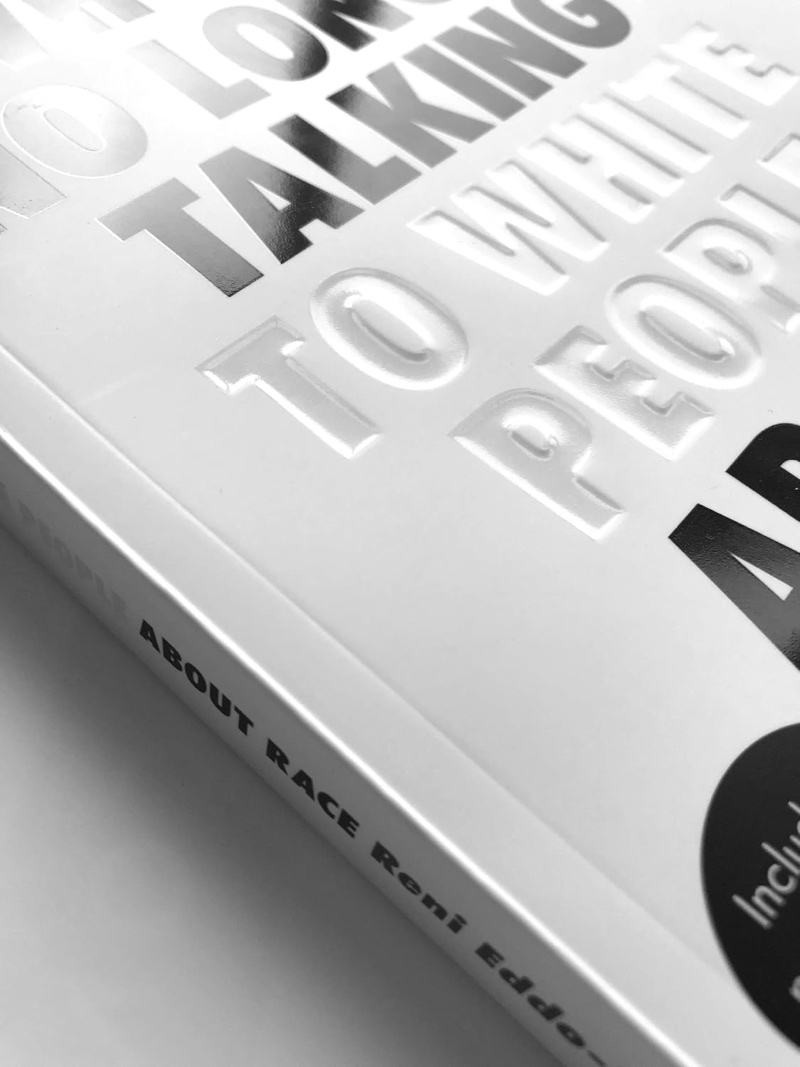 I completely understand why the Black British writer Reni Eddo-Lodge titled her debut book Why I'm No Longer Talking to White People About Race. When large institutions, churches, cultures, and traditions remain untouched—sometimes seemingly immovable—despite repeated commitments to decolonisation and racial equality, people such as Eddo-Lodge and countless other Black and Brown individuals can reach a point where they understandably think and sometimes say: “I am no longer talking to white people about race.”
This is less about disengaging from the struggle and more about hope being deferred once again.
The tragic murder of George Floyd on 25 May 2020 sparked global protests. Shocked by the level of police brutality, the world responded with calls for change. Promises and commitments to create a more equitable society followed swiftly. Yet six years later, it feels as though many of those commitments to building an anti-racist society have fallen by the wayside.
The horrific events of the summer of 2024 reinforce this concern. Towns and cities across England and Northern Ireland—including Hull, Sunderland, Liverpool, Aldershot, Leeds, Tamworth, Belfast, Bolton, Stoke-on-Trent, Doncaster, and Manchester—experienced outbreaks of racist violence. For a week, networked mobs and disorganised groups of racists made it clear that, in their view, only people of a certain complexion belonged in their towns and cities.
In Middlesbrough, roads were blocked and white drivers temporarily exercised the arbitrary power of both traffic wardens and border officials. In Hull, a man was dragged from his car and beaten while an angry crowd chanted, “Kill him, kill him.” In Belfast, a Muslim man was stabbed, a mosque was attacked with a petrol bomb, and businesses owned by Muslims were vandalised. The catalyst for this carnival of racist hostility was the horrific mass stabbing in Southport on 29 July.
The common thread linking the events of 2020 and 2024 is the nature of the response. On both occasions, calls for radical change were transient. Initial commitments to addressing systemic racism were extensive and vocal but demands for a more just society were soon replaced by ‘performative allyship’: corporate statements of solidarity with Black and Brown communities, charitable donations in place of meaningful action, and symbolic gestures replacing the challenging work required for genuine transformation.
We should therefore not be surprised that only a year later Black and Brown communities witnessed flags displayed on lamp posts, protests surrounding hotels used to house asylum seekers, the frequent use of the word “tinderbox,” and constant predictions of further unrest.
Just when it seemed things could not get worse, they did for people like me. The media has been saturated with coverage of the tragic murder of Henry Nowak. Nowak was stabbed five times in the face and chest with an eight-inch blade allegedly carried illegally by Vickrum Digwa. The sequence of events that followed was deeply troubling. As Nowak lay dying, reports suggest that Digwa’s brother called the police and stated that he and his brother had been victims of a racist attack but did not disclose that Henry Nowak had been stabbed. Footage from recently released police body-camera recordings has reignited an emotional national debate about whether Britain operates a “two-tier” system of policing.
This is far from the truth. Government data, for example, shows that in England and Wales there were 52.6 stop-and-searches for every 1,000 Black people, compared with 7.5 for every 1,000 white people. In 2018, according to StopWatch, Black people were nine times more likely to be stopped and searched for suspected drug possession despite using drugs at lower rates than white people. These figures represented a marked increase from 2011, when Black people were six times more likely to be searched for drugs.
More recent figures continue to show significant disparities, with Black people still being stopped several times more frequently than white people relative to population size. Research commissioned by the Mayor of London’s office also found that Black people were seven times more likely than white people to be stopped on suspicion of carrying weapons. I could continue citing evidence that demonstrates how unequal systems disproportionately affect Black and Brown bodies.
No one can doubt the tragedy of Henry Nowak’s death. However, using his death as an opportunity to advance claims of anti-white racism, or to suggest that British society privileges Black people over white people, is a deeply flawed argument that lacks credible evidential support. It is, indeed, total nonsense.
Given the current landscape, which has deteriorated significantly over the past year, the era of ‘performative allyship’—or political correctness—must come to an end. Social-media photographs featuring anti-racist books as decorative backdrops, shared but unread articles about Black experiences, the wearing of traditional clothing on special church occasions, or the display of national flags within church buildings can all be interpreted as superficial gestures designed to gain social approval without any real commitment to substantive action or the dismantling of systems of inequality.
This kind of performative allyship often plays out in Baptist churches that proudly point to their cultural diversity, yet diversity alone does not negate unconscious—or even conscious—manifestations of racism. Racism has a way of embedding itself subtly within our churches and often becomes visible only when a Black or Brown pastor is called to serve the church, or when there is a shifting cultural demographic in which Black congregants appear to outnumber white congregants. Yet a culturally diverse congregation is not necessarily an anti-racist congregation. Appearances can be very deceptive.
During my tenure, I have witnessed encouraging signs of growth: the Apology in 2007, numerous flourishing culturally diverse congregations, constructive anti-racist resources, the iconic Sam Sharpe lectures, Justice Hubs, and the Racial Justice Advocacy Forum.
I could go on. However, in the here and now, some very serious questions need to be asked: is diversity reflected in theology, preaching, worship, culture, leadership, and relationships? Does the church actively cultivate cultural empathy and inclusion? Or does it function as a “two-tier” institution that prioritises whiteness while resisting engagement with liberation theologies and discouraging—or, at times, failing to release—marginalised voices to influence and shape our churches?
“Vulnerable” is one of the many words I would use to describe how Black and Brown people feel in Britain now, including in our churches. This may help explain why increasing numbers are securing Nigerian, Indian, Ghanaian, Jamaican, and other passports alongside their British passports. Should an immediate exit strategy become necessary because of the impact of potential Reform policies and governance, they are prepared to leave what they have long considered home.
So, what does this disturbing trajectory have to say to Baptists Together?
Now more than ever, white leaders within our churches, associations, colleges, and specialist teams need to think honestly about forcefully and proactively challenging racism. This means creating pathways to ensure that the voices of Black and Brown Baptists are listened to at every level within our Baptist family; bringing genuine transformation to our structures and relationships; and beginning the work of decolonisation. If, however, this ‘season’ is unable to compel our ‘Baptist family’ to adopt strategies that enable root-and-branch, long-term, radical change, we should not be surprised if the reactions and responses of many Black and Brown Baptists are proportionate to Baptist inactivity.
To build on Reni Eddo-Lodge’s ubiquitous words, I am certain that many women are tired of carrying the burden of advancing gender equality. Similarly, many Black and Brown Baptists have reached a point of lingering frustration at continually having to raise their voices and expose themselves to criticism on issues not of their own making.
In closing, it is obvious to me why increasing numbers of Black and Brown people are reluctant—some have even stopped—talking to white people about racism in church and society: systemic change is limited, often absent, and commitments are made but infrequently followed through. The space continues to reflect the image of those who created it.
Hope deferred, alongside the accumulation of disappointments over the years, eventually generates the response captured in Reni Eddo-Lodge’s words: ‘Why I am No Longer Talking to White People About Race.’
As Christians, we are called to love our neighbours. I hope that this precarious and vulnerable landscape inspires white Christians to seek to protect the mental health of Black and Brown bodies. This can be done by speaking about racial injustice with us, and even for us.
Wale Hudson-Roberts is the Justice Enabler of the Baptist Union of Great Britain, and pastor of John Bunyan Baptist Church in Oxford
Do you have a view? Share your thoughts via our contact form
07/07/2026