The Indian Christian/Hindu experience distilled
The key to relating to others and living peaceably together is not learning to understand them, but learning to understand ourselves
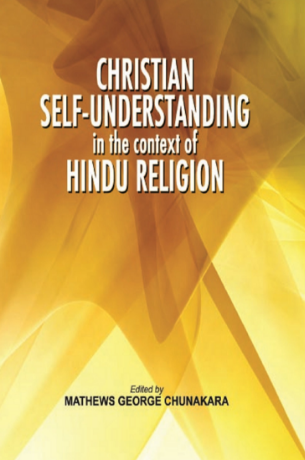
Christian Self-Understanding in the Context of Hindu Religion
Chunakara, Mathews George (ed),
Tiruvalla, India,
ISBN: 978-81-7821-697-7
Reviewed by Alec Gilmore
If you don't live 'in the Context of Hindu Religion' don't let the title put you off.
There is meat here for Christians everywhere, especially in churches living and working in a multi-faith area or environment, be it home, work, school or university.
With one eye on where we are, living increasingly in mixed and diverse communties, the Indian experience of living like that over hundreds of years has much to give us pause for thought.
The over-riding message is that the key to relating to others and living peaceably together is not learning to understand them, but learning to understand ourselves and how the way we see ourselves promotes or hinders our relationships with them.
The Indian Christian/Hindu experience, going back long before the modern missionary movement, is here distilled by eight contributors following a consultation of 30 academics and clerics from a wide variety of sources and backgrounds in the sub-continent.
As a study book for small local groups it may approximate to A Beginners's Guide on Do's and Don'ts for those at the grassroot level. Here are just three of many stones worth turning.
One is to re-read the Bible with a sharpened sensitivity to how texts may be read (and used) differently by people of different faiths, with special attention to a built-in tendency on our part to focus on texts with a negative attitude to other religions.
That central text of the modern missionary movement for example (Matthew 28:18-20) reads very differently in a country which sees it as a battle cry for imperialism, colonialism and ecclesiastcal expansion, while Isaiah 54: 2-3 comes across as not necessarily meaning 'go out and convert everybody' but strive to develop a truly pluralistic view of the world we all share. 'Difference and distinction' rather than 'divisiveness and opposition', because today there are 'no longer any religious or cultural absolutes'.
A second is how we see Jesus. Many Hindus quite warm to the biblical Jesus but not quite to the familiar western emphases, with less attention on doctrine, Person and Work and more attention on that 'inner spirituality rooted in him' especially those incidents which focus on the inclusive nature of his ministry (Samaritans, Greeks, women, the poor, and so on) too often dismissed or by-passed as if of minor consequence.
Buried under the third stone lie the more 'touchy' issues of conversion, proselytisation and the church. In a land which has known at least five different major religions living side by side for hundreds of years without any insistence on 'exclusive affiliation', or the urge to convert from one faith to another, proselytisation and conversion became major issues when 'exclusive affiliation' requires a person who changes their faith to leave one community for another.
Many Hindus would prefer to see an Indian convert to Chrsitanity drawing their resources for growth from the Hindu tradition rather than a growing institutional western church with its eye on building and expanding its 'empire' and in danger of getting in the way of 'the revelation of Christ Himself'. Even a modicum of self-understanding at this point might have opened a door to 'the place of a religious minority community in the wider society'.
A useful foundation for a common platform for people of different faiths to share common hopes and aspirations in a complicated and chaotic present world order with due reference to both faiths, with Jesus on the one hand and (in their case) the Hindu Ambedkar (the Indian icon of liberation) on the other.
Alec Gilmore is a Baptist minister
Baptist Times, 07/10/2016