New book provides further insight into Baptists in the 17th century
Rather than retell familiar political narratives, the new collection of essays from the Baptist Historical Society probes the convictions, practices, and lived experience that shaped congregations in times of revolution
 The story of Baptist beginnings in the 17th century is often seen through the lenses of political upheaval. Baptists along with other Dissenters – Presbyterians, Congregationalists, Quakers – emerged at a time of dramatic change in England. King and Parliament clashed, and the Civil Wars, which would last from 1642 to 1651, created great uncertainty, but also allowed for the growth of dissenting religious groups and new expressions of Christian faith.
During the Interregnum – the eleven years between the execution of Charles I and the restoration of Charles II – religious Dissenters enjoyed relative freedom, and steps were taken to allow the readmission of Jews to England (banished since Edward’s expulsion in 1290). Seizing this new-found religious freedom, Baptists produced Confessions of Faith, as well as many tracts and treatises which set out their understanding of Christian faith and practice.
Of course, from their inception, there was never total agreement by all Baptists on every theological point of view. Some Baptists held to general redemption and others salvation for the elect only; some worshipped on a Saturday and other churches included both baptised and non-baptised members. Services were often protracted, and the preachers could be long-winded and wordy!
By the end of the century, there was more than a little controversy as some congregations began to sing hymns in worship, as well as using Psalms. In many ways, this early period was a time of experimentation as people expressed a desire to discover God in worship through 'new expressions' of faith.
Members of congregations came from a variety of backgrounds. Some (few) held positions of influence; others were among the very poor. There were a few converts from the state church ministry. Most people came from the middling sort – artisans, business people and their families.
Initially, there was greater scope for women to offer an active contribution, though by the end of the century these opportunities seemed to wane. Some of these baptistic believers were seen as politically radical, particularly those who joined the New Model Army, or who identified with the political Leveller movement, and there were some who joined with the Fifth Monarchists – a loose grouping of women and men who claimed that the Second Coming of Christ was imminent and it was up to them – as God’s chosen ones – to usher it in.
These associations, in particular, as well as the reports of alleged secret meetings in conventicles, midnight baptisms, and certain scandalous women gave cause for some alarm as 'fake news' stories began to circulate among opponents of Dissent, accusing Baptists of immoral and seditious behaviour.
In response, Baptists continued to emphasise that Scripture was central for their understanding of who they were and what God expected of them. For the most part, these were ordinary women and men who ate and drank, laughed and cried, suffered, worked, married and had families, and gathered for worship as they felt called to do by God.
The restoration of Charles II in 1660 marked a dramatic shift. For Baptists, he was not a 'Merry Monarch'. Gatherings for worship were outlawed and Dissenters were constantly faced with threats of fines and imprisonment.
It was not until the accession of William & Mary in 1688 and the passage of the Act of Toleration in 1689 that Baptists and other Dissenters received limited freedom to worship. The new era posed its own challenges but the turn of the 18th century saw Baptists as legally recognised, albeit second-class citizens, and free from institutional persecution in England and Wales.
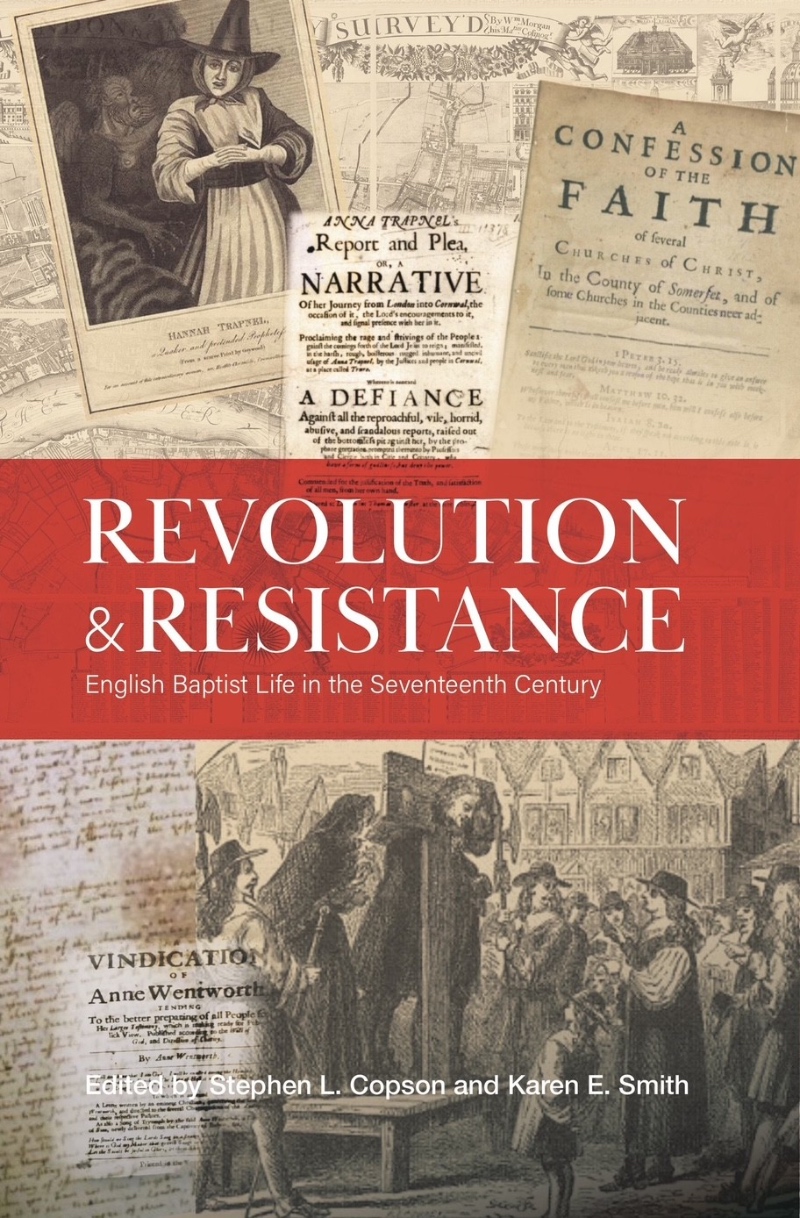
A new collection of essays published by the Baptist Historical Society as Revolution and Resistance, provides further insight into the story of English Baptist life in the 17th century. Building on the foundational work of Dr Barrie White, these essays provide a companion volume to his work, English Baptists of the Seventeenth Century (1983, rev.1996). While acknowledging the social and political context, in this volume special attention is given to theology and ministry; organisation and local church life, hymns and poetry, Biblical exposition, and the participation of women.
Revolution and Resistance - English Baptist Life in the Seventeenth Century is edited by Stephen Copson and Karen Smith.
It retails at £25 and is available on the Baptists Together shop.
Do you have a view? Share your thoughts via our contact form
Baptist Times, 01/04/2026